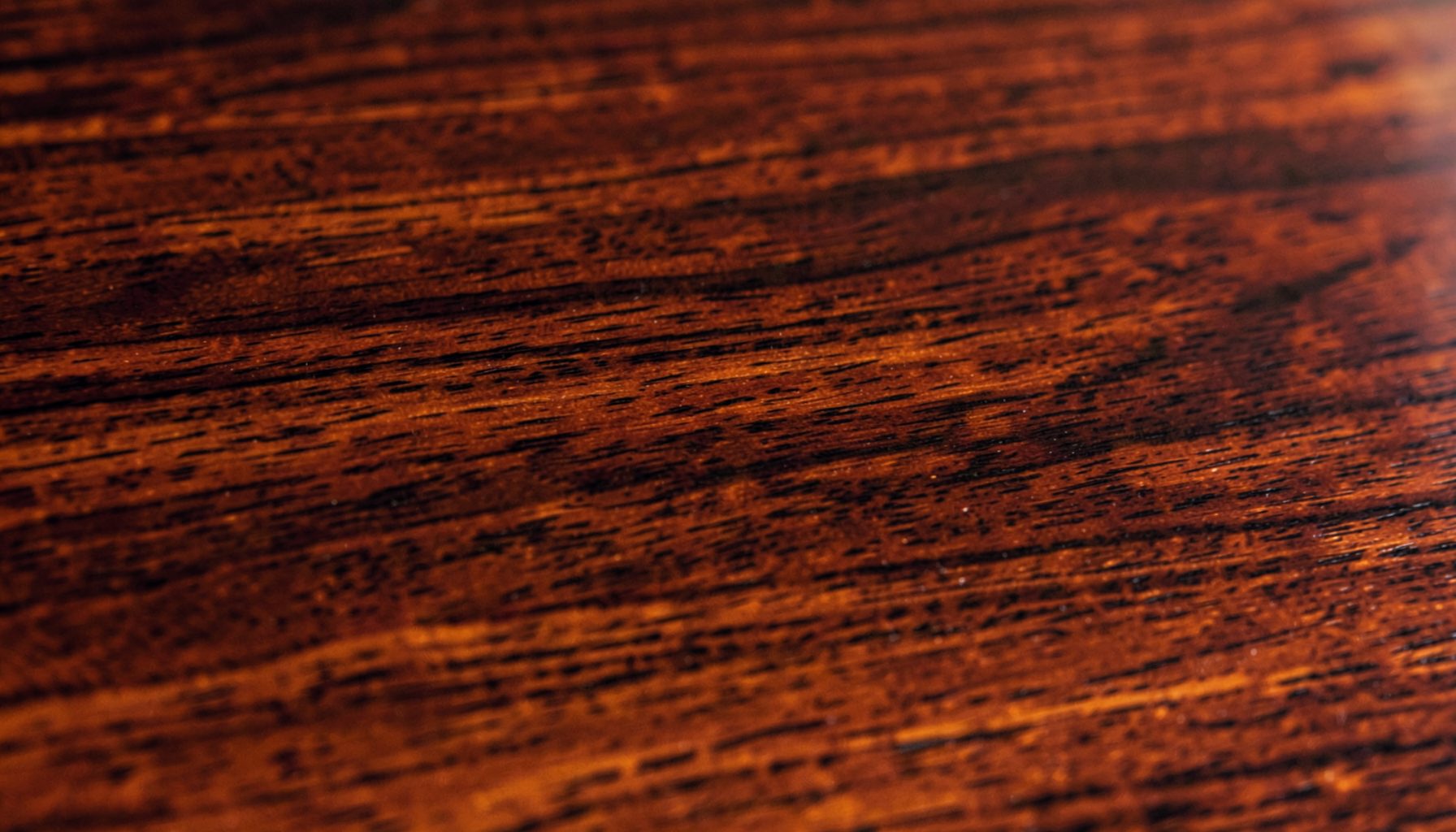
One of the most common questions in antique furniture is whether a piece is crafted from solid mahogany or from mahogany veneer laid over a secondary hardwood. Bob and Ellen Tuttle, drawing on more than 30 years of refinishing experience, developed this essay to help collectors and homeowners tell the difference.
Why It Matters
Solid mahogany and mahogany veneer each have their own strengths. Solid pieces offer heft and the ability to be refinished many times over. Veneered pieces, by contrast, often showcase more elaborate grain patterns and were a hallmark of fine American cabinetmaking — not a shortcut. Knowing which you have informs how you care for, value, and restore a piece.
How to Tell the Difference
Examine the Grain
On a solid piece, the grain pattern continues consistently across edges and around corners. With veneer, you may notice a seam or a change in grain direction where two sheets meet, particularly along the top edge of a table or the side of a drawer front.
Look at the End Grain
Solid wood reveals end grain on the top or bottom edges of a board. Veneered furniture typically covers these edges with a thin strip of matching veneer or a solid wood edge band. Run your finger along the edge — a subtle lip or seam can indicate veneer construction.
Check Inside Drawers and Undersides
Secondary woods — often poplar, birch, or gum — are commonly used for drawer sides, bottoms, and cabinet backs. If the primary surface is mahogany but the interior reveals a lighter, less expensive wood, the piece is almost certainly veneered. Solid mahogany furniture uses mahogany throughout.
Tap and Feel
Solid wood produces a deeper, more resonant sound when tapped. Veneer over a secondary substrate can sound slightly sharper or thinner. Likewise, solid mahogany feels substantial and dense; a veneered panel may feel lighter relative to its size.
From the Tuttles: "Neither solid nor veneer is inherently superior. The finest American furniture of the early 20th century often used carefully book-matched mahogany veneers over stable hardwood cores — a technique that required extraordinary skill and produced stunning results."
Common Misconceptions
Many people assume veneer signals lower quality. In fact, veneering has been practiced for centuries and was used extensively by top-tier manufacturers during the 1900–1950 golden age of American furniture. The key is not whether a piece is veneered, but how well the veneer work was executed and how the piece has been maintained.
This essay is part of the Furniture Facts series, developed by Bob and Ellen Tuttle of AMG Vintage House to share decades of hands-on knowledge with fellow enthusiasts.